

Day Three: Hrot
Nuclear Winter Wonderland

Welcome to Brown Town
Quake was a spooky game. You fought off eldritch horrors in alternate dimensions, looking for the mystic runes that would help you destroy an ancient god. It had hellish levels, a dark, atmospheric soundtrack and tons of hideous monsters. Developer Spytihnev played Quake and said “you wanna know what’s scarier than interdimensional beings? Communism”.
Read on to find out why Hrot (pronounced Ha-rot) is a shorter game with worse graphics, made by people paid more to work less that you should play.
What is it?
Hrot is a first person shooter set in the former Soviet Union (Czechoslovakia, specifically). It’s a boomer shooter, which means you’ll be going through levels looking for keys to open doors, finding secrets and using a bunch of different weapons to kill monsters.
It’s a straightforward game, but what it does, it does well. The levels are well crafted and intuitive. They’re more streamlined compared to older shooters. They’re not as labyrinthine, which means they’re smaller with less to explore, but you won’t get lost, and you don’t have to spend twenty minutes looking for the next door to open. The level design takes lessons from Quake. They have paths that circle back into each other, creating a nice flow where you’re always moving forward towards your goal.
The enemies do a good job of stopping your progress. They hide in rooms or block your path down long sight lines. There’s the standard shotgun grunt, guys that carry exploding barrels (that the game loves to jumpscare you with), and some enemies taken directly from Quake like the big grenade guy and the floating specters that fire green bullets. They work well together. The game puts you in fights against different mixes of enemies, letting their strengths shine. The big grenade guys will flush you out of cover with their explosives, the grunts will chase you down while you dodge, and the specter enemies will float above cover in open areas, catching you off-guard. There are also some newts at one point.
The enemies shoot projectiles, so you can dodge their attacks with good movement. They hit hard and can get the jump on you, but you can circle strafe around some of them and they can’t do much about it.
I’ve referenced Quake about six times throughout this article, but it’s because this game takes very heavy inspiration from it. The weapons, level design, enemies, atmosphere, and graphics, all have that signature Quake touch to them. The difference here is that the game plays more like an older shooter. Think DOOM or any of the Build Engine classics like Shadow Warrior. You can’t bunny hop and gain ludicrous speed, and rocket jumping doesn’t send you into the stratosphere. It’s a more grounded game, but that doesn’t mean it’s worse than Quake. It’s still a great shooter with a strong understanding of the genre’s fundamentals. It doesn’t copy Quake one-to-one, but it doesn’t have to.
Short
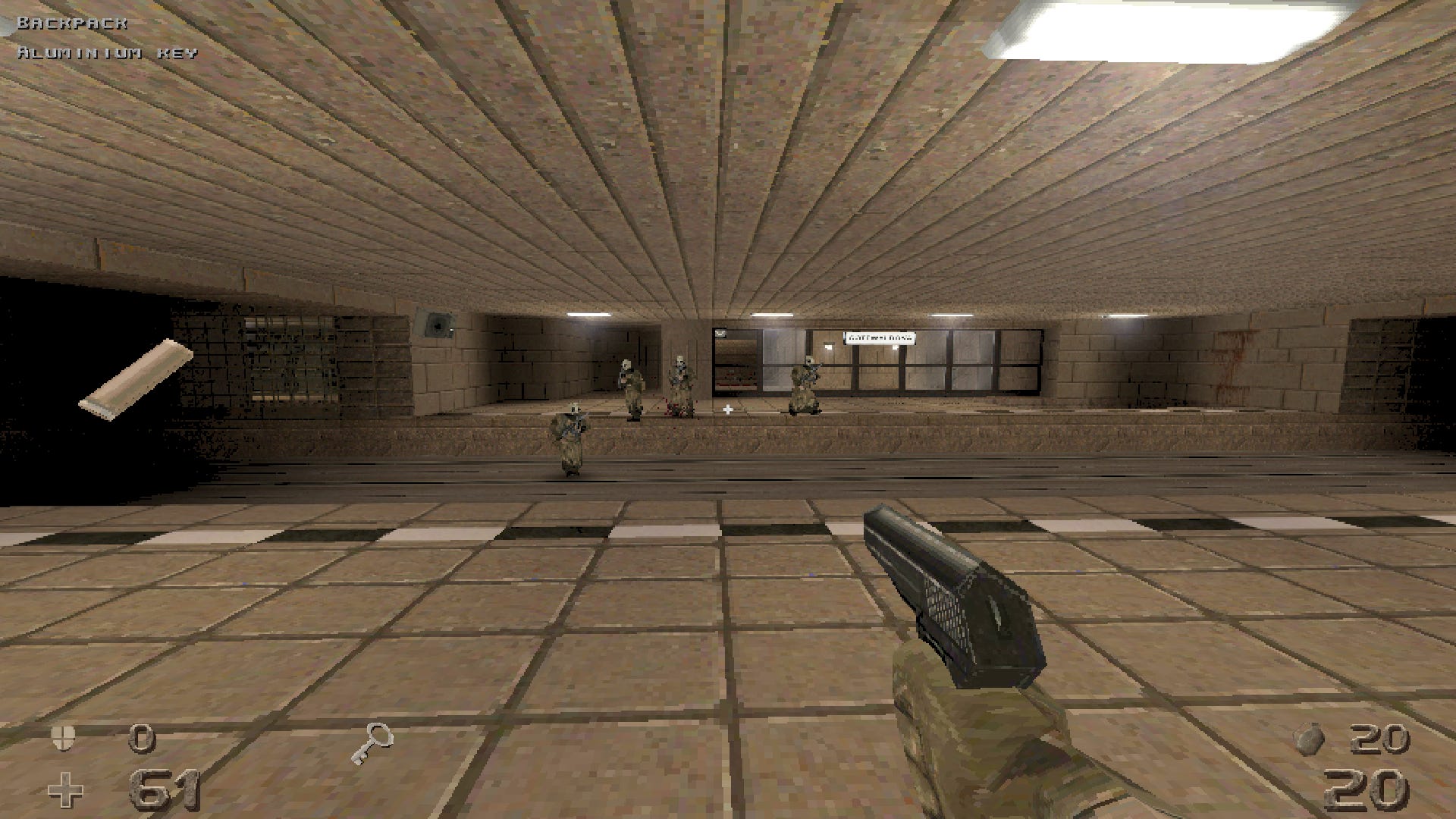
Clocking in at around 5 hours, you can get through the game’s three episodes relatively quick. It doesn’t outstay its welcome. The game varies its core ideas just enough to keep you interested, without straying too far from its base gameplay. It does this by offering different kinds of levels. Some are larger, with open arenas, some are more claustrophobic, taking place inside tiny hallways, and some are a mix of both. The themes and enemies change, and the game’s surrealist tone keeps things from getting stale. One minute you’re fighting guys in radiation suits, the next you’re shooting at a living pommel horse inside a gymnasium. It all feels coherent and like part of the same world, somehow. Mostly due to the visual design.
Worse Graphics
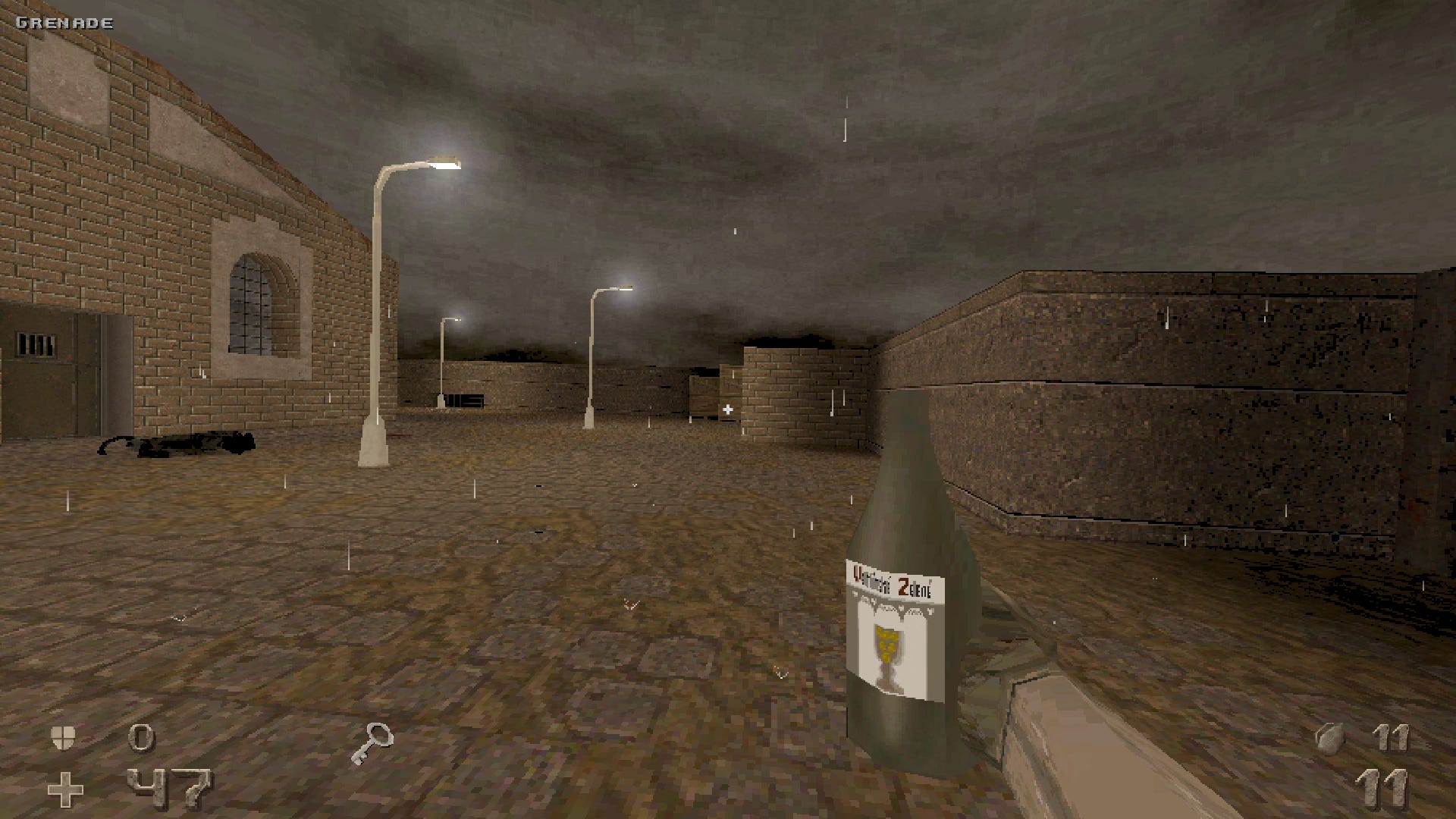
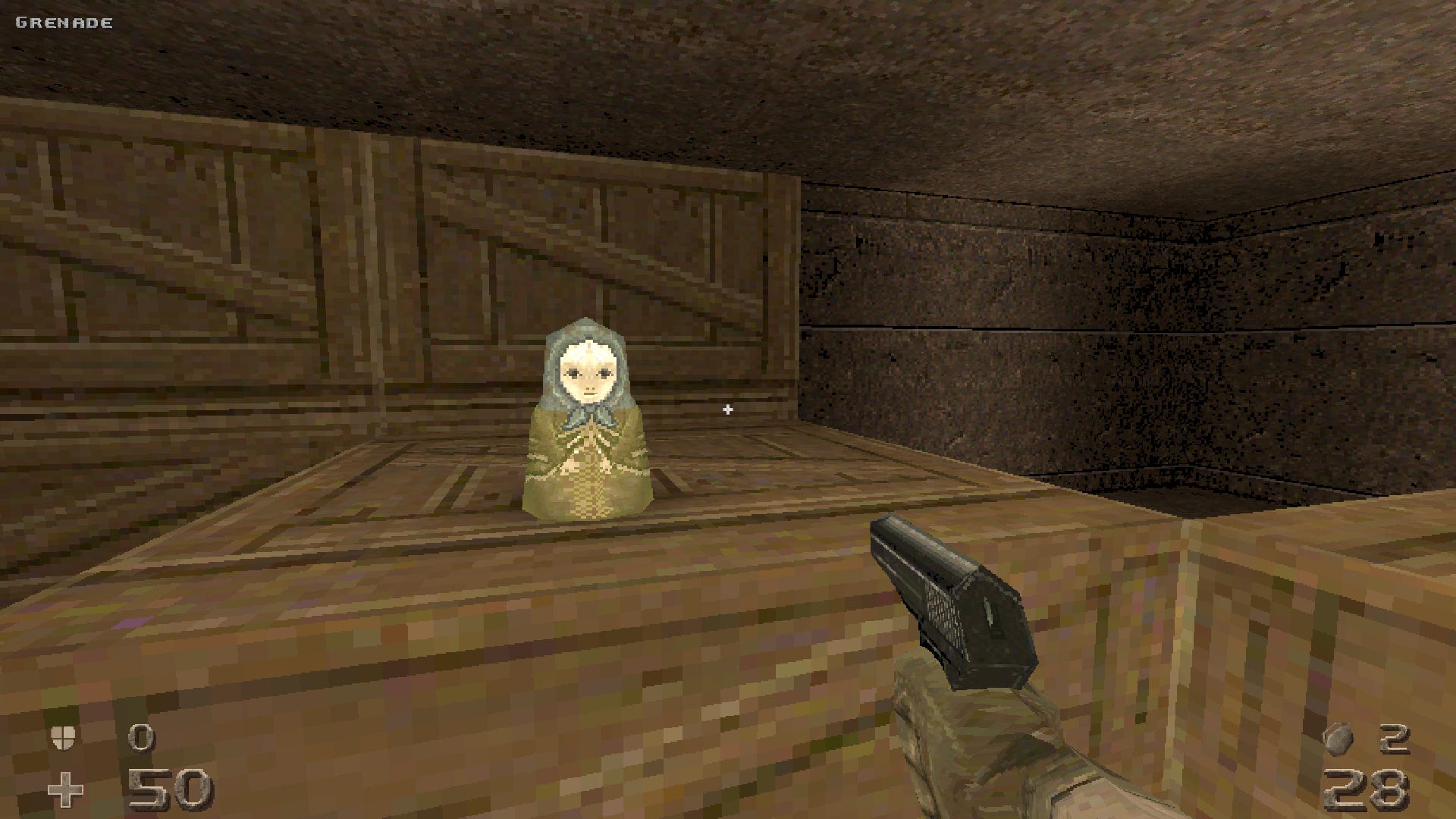
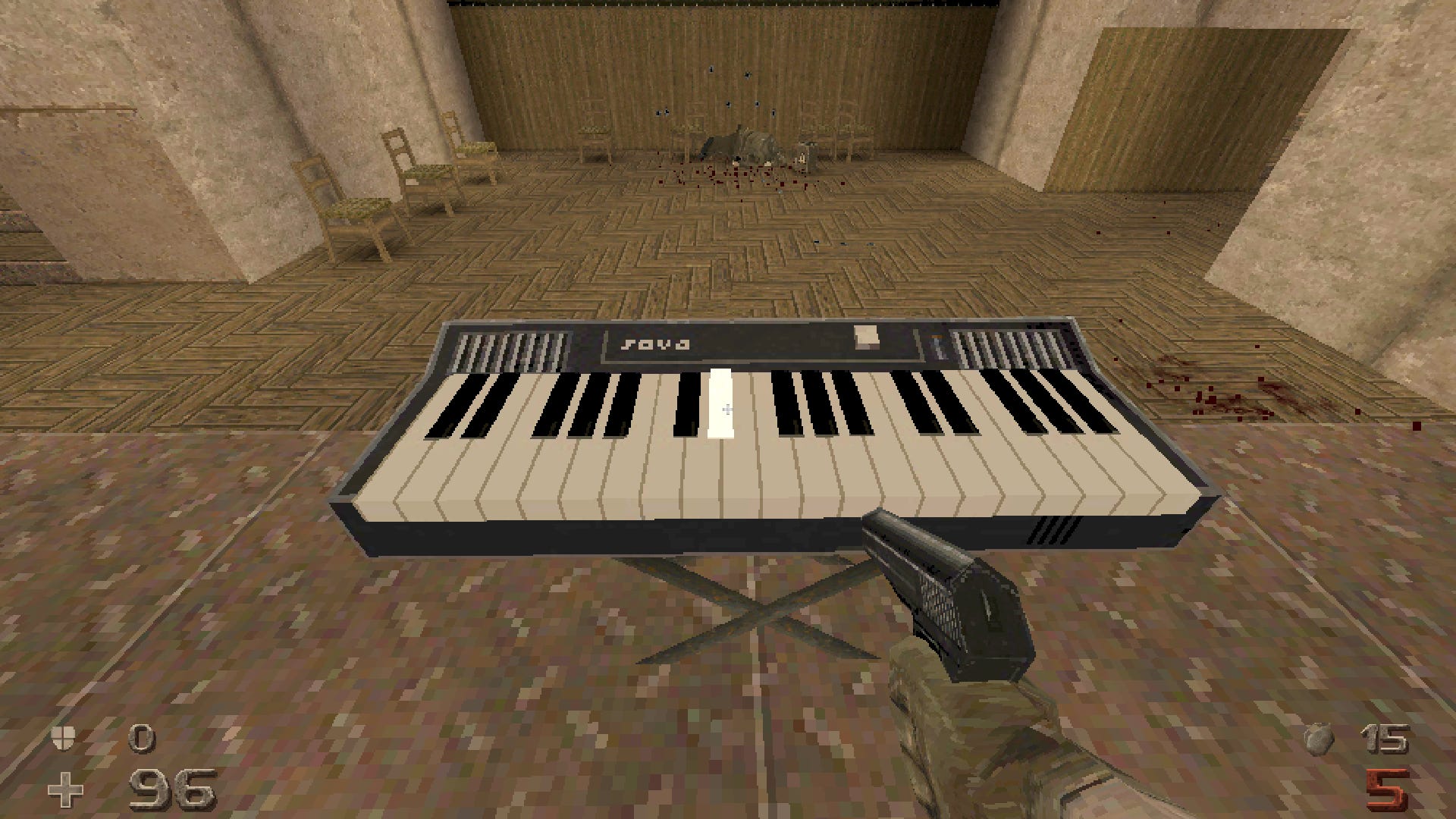
It deliberately invokes the games of years gone by with a low poly look. Enemies are big, boxy things with less vertices than pixels. The textures are low-resolution and rough. You can see individual pixels. To add to the retro look, the game has built-in jitter to give it that unsteady look some older games had.
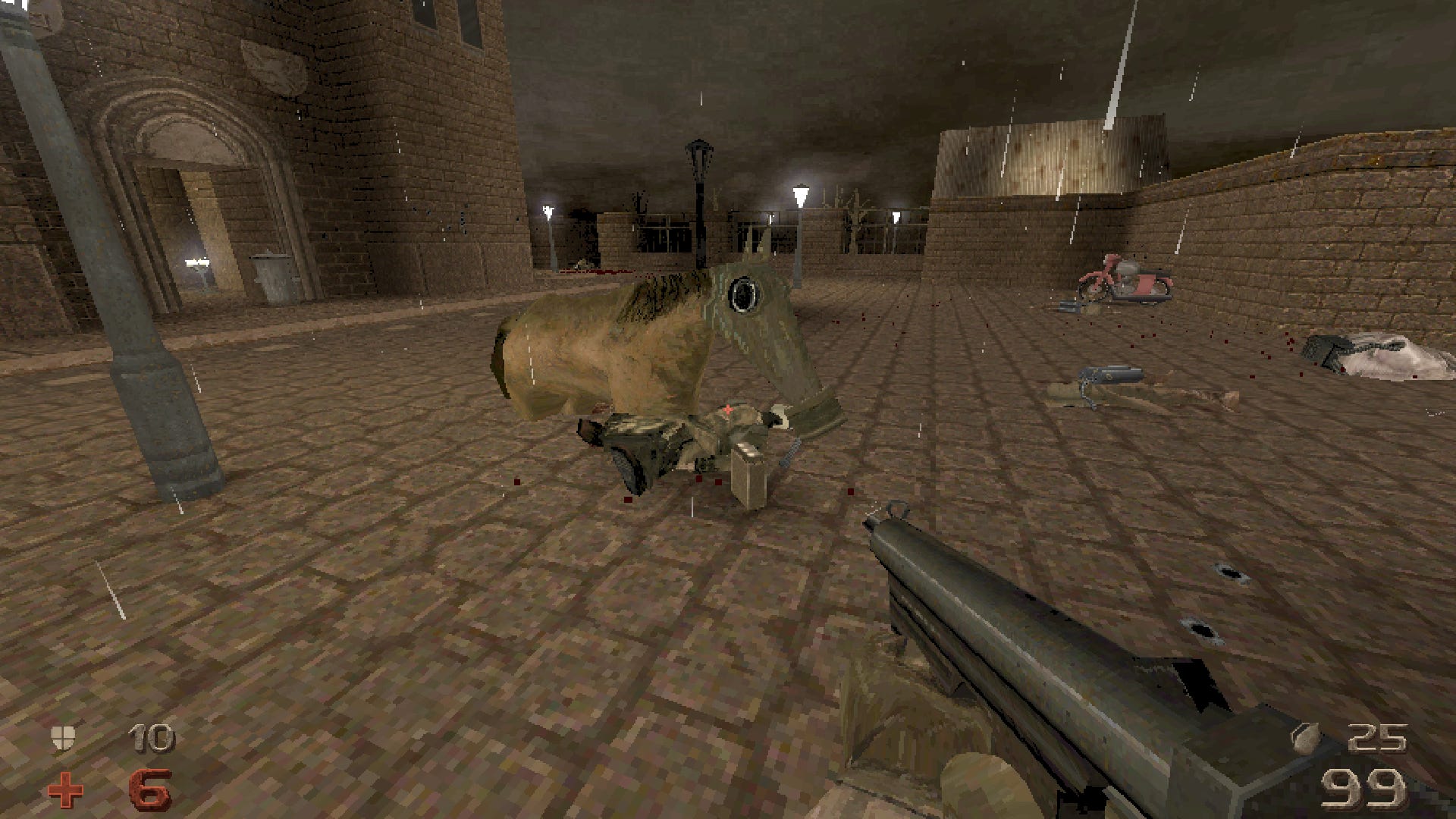
The visual style does a lot to convey the game’s grim atmosphere. It’s brown. Very brown. Everything is brown. It takes place in Czechoslovakia, surrounded by Soviet architecture, brutalist megastructures, commie-block apartments, towering monuments to the government and public offices. All these buildings are in a state of disrepair, with rust and decay marking every surface. It’s a very strong visual style that helps tie everything together. It makes even the more absurd enemies, like the giant horses wearing gas masks, feel like they belong in the game. The dark, moody lighting helps with this, too. Every indoor area is lit with harsh white light, which leaves a lot of stark, inky black shadows that look really nice.
The only downside to all this brown rot is that it starts to look very samey. After a few hours, you’ll be sick of brown, and you’ll be begging for any splash of color, but the game will only give you a little red, maybe some puke green if it feels generous. Good thing the game is short, so you’ll never get too sick of all the dilapidation and disrepair.
The sound helps a lot with the decroded atmosphere. Grim, moody atmospheric tracks with a touch of bass to drive them along. The guns sound nice and punchy, the enemies are creepy and constantly groaning, and there’s the ever-present skittering of a Geiger counter reminding you that you’re not in the best place, and should get out before you grow a third arm.
I like the game’s presentation, even if it lacks variety. It has a strong visual identity, and it does a great job of establishing an oppressive, dingy atmosphere. The added bits of humor and surrealism are a lot more memorable thanks to the game’s constant, droning brownness.
Made By People Paid More to Work Less
Hrot was developed by one guy, Spytihněv. In an interview on one of his previous games, The Tragedy of Prince Rupert, he says he’s a factory worker, and makes games as a hobby. Hrot was developed over a period of six years. It started in 2017, then it released into early access in 2021. The game was completed in 2023. Six years for one guy to make a retro shooter seems like a good turnaround. It seems like less work, then you find out he coded the game’s engine, like the guys at id Software used to do, which is admirable. If he’s going through all the trouble of doing that, you know it’s because he wants to. Developing a game at your own pace with full creative freedom and the ability to make your own engine for it because you feel like it sounds like a good working environment, so I think it counts.
Conclusion
Hrot is a pretty cool game that you should check out. It’s a solid first person shooter with well designed levels, solid enemies and interesting ideas. Its overwhelmingly brown aesthetic might not be for everyone, but it’s very cohesive, and does a great job at establishing a very memorable setting and atmosphere. I recommend you give it a try.
You can get Hrot for $20, but it goes on sale often for a lot less. At the time of writing, it’s on a 60% off sale at $8. That’s a steal.