Silksong's Price Is Not a Problem
Nooo not my heckin pricerinos!

The Silk Road Beckons
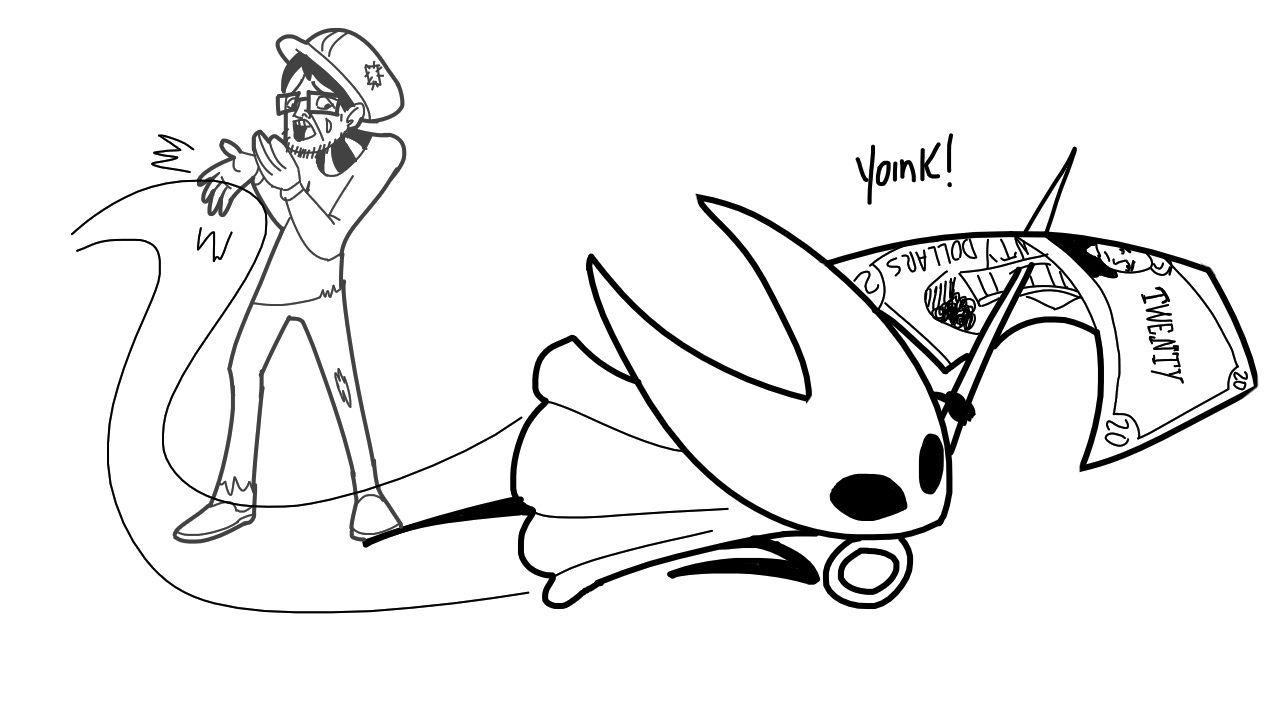
Silksong is finally out! Rejoice! After seven years of waiting we can finally get our hands on what is, according to some early reviewers, the greatest game of all time. We’re looking right at gaming’s glittering peak. The only way this could be better would be if the game released at an affordable price. Something like say… twenty dollars? Nah. That’s too cheap for such an anticipated release.

Wow. That’s a price even I can afford! I mean- with all the money I make off substack, I could easily buy several dozen copies to give away to all my friends.
This is what the industry needs: more well-made games at affordable prices. I don’t see how anyone could object to this in any way, shape or form.
So of course people on social media complained. It’s too cheap! This will set a bad precedent for other indie games going forward! Now my indie game will be compared to Silksong and its price will be scrutinized. They’ll look at it and say “why should I pay thirty dollars for your smelly old game when I could get Silksong for less?”. Absolutely devastating.
I’m going to ignore the obvious here, that this was just a marketing ploy for some indie devs to attach themselves to Silksong in the most tangential way possible and get eyes on their game. I know how online marketing can be, and I respect the hustle, but I won’t engage on that front. Instead, I’ll do my own slingshotting and use this as an entry point into the Discourse ™ on game pricing.
How much should a game cost? How much is too much? Does pricing a game too low hurt others?
How Much Should a Game Cost?
Less. Games are really expensive, and I think they shouldn’t be. The lower the price, the better. I understand you need to recoup costs and make a profit, but I’m the consumer and you’re the producer. You’re the supply, I’m the demand. We’re in an adversarial relationship. My gain is your loss and vice versa. Your job is to convince me to pay for your game, and I can either accept or decline.
The price should be a compromise between what the buyer is willing to spend and what the seller can profit off. If your game costs billions to make, you’ll need to price it at $70 and sell millions of copies just to break even. This is what I like to call being delusional.
Most game developers are delusional. According to an article by Stephen Totilo (paywalled), sourced from a court filing, Treyarch spent $450 million over three years to make Call of Duty: Black Ops 3 back in 2015. Black Ops Cold War cost over $700 million.
I don’t know what those titles mean. There’s a new Call of Duty out every few months, and it all looks like vomit. I think Beavis and Butthead are in one of those. I thought it was supposed to be about World War 2, but at some point it turned into Forntnite for people who think they’re too old to play Fortnite, but not old enough to have developed any sense of aesthetics or taste, evidently.
These games sell millions of copies at sixty dollars, making back their initial investments. If we use that one dubious method to calculate movie revenue, we can take the game’s budget, double it to account for marketing, and see how much it made on sales alone. This gives us a budget of $1.4 billion, which seems like an absurd amount, but it makes sense if you consider that it’s a live-service games with constant, ongoing expenses. It sold over 30 million copies, assuming at $60, for 1.8 billion dollars, subtract from that the 1.4B budget to get 400 million dollars in profit, or 22%. This is the RCRIJPOMA, or the “Roughly Calculated Revenue I Just Pulled Out My Ass”.
How much should a game cost? Enough to cover expenses, which means that a 460 million triple-a game can sell for $70. It just needs to sell millions of copies to recoup costs.
How Much do Indie Games Cost?
Of course, indie games aren’t going to have such eldritch budgets, but calculating an actual budget for one is very difficult. Most of these games are made by small teams who cover their living expenses out of pocket, meaning they don’t have salaries. At least not from the games, so calculating their costs is a bit tricky.
Thankfully, there are multiple indie devs who opened up about their financial situation and shared it on YouTube.
Wizard Shrimp Games, who made the game of the same name Wizard Shrimp, broke down his expenses and revenues in a video. In the expenses, he includes what he paid for advertising (via stickers and some instagram promotional posts), some materials he purchased (keyboards and components for another project) and the long list of taxes he had to pay to The Queen. The game sold 998 copies on Steam at $2.99. His expenses came in at 2,213.66 pounds and his gross revenue was 2,213.94, for a total net revenue of 323.72 pounds. Slightly less than Call of Duty.
Firebelley Games posted a video discussing the financials of his game Gunforged. The game made $9,017 in total revenue with 1,640 copies sold at $8.99, with most of the sales coming in the game’s first week when it was discounted. Firebelley does not specify expenses, but he says that the revenue isn’t enough to sustain him as a full time developer and he’s losing money on expenses.
MaxyDev, who made World of Unlit also shared his story in video form. He spent $3630 and made only $559.67 in net revenue. A financial loss. He doesn’t say how many copies were sold.
There are a few key takeaways from all these numbers. First, and most obvious, is that indie games have very thin profit margins. Their budgets are low, but their revenues are also low. Sure, you could make a breakout smash hit for a few bucks and end up rolling in dough, but you’re just as likely to end up with enough money to buy dinner and maybe dessert. It’s like playing the lottery, almost.
Second is that marketing is a nightmare. This is also obvious (to me, at least). These devs bought ads on social media, only to see very poor returns. Social media is terrible and its existence is an active detriment to humanity. It’s not even good for advertising, which is its sole purpose for being.
For advertising that actually works, The Steam Next Fest is a fantastic way to get your game out there. Every developer that participated in it saw a dramatic spike in wishlists and views for their game, which translated to sales at a rough 10 to 1 ratio; one sale for every ten wishlists. This ten-to-one ratio is standard across social media platforms, where only around 10% of users will engage with content on a significant level. Except for Twitter. There the ratio is more like one hundred-to-one, or even worse. Twitter is a cesspool and its userbase is full of bots and freeloaders. Never advertise there.
There is still no mention of living expenses factoring into the budget. In a regular studio, the employees’ salaries would be part of the budget. Indie devs usually have a day job or have some other way to buy food while they work on their game, but they don’t seem to talk about it much, which leads us to the next point.
Independently Wealthy
The same person totally not complaining about Silksong’s price mentions that these indie devs are “independently wealthy”, which leaves their games with a budget of “effectively zero dollars”. Those must be some insane profit margins. Zero expenses, full profit? Wow. Sign me up.
The full quote:
millions of people will probably buy silksong on day one, and it was a game that had a very "low" budget, because the budget is "these devs worked on it without direct pay for however long they wanted to do that." it had a "these devs are independently wealthy" budget of "effectively zero dollars."
they can price however low they want, as a result. their return on investment is infinite no matter what they do. but by charging such a low amount, they are causing lizard brain signals to fire off saying "this kind of game is worth twenty dollars. you should expect this game for twenty dollars."
I think indie devs don’t talk about their living expenses as being part of the budget because they don’t see it as that. This betrays a fundamental lack of economic intelligence. No wonder there’s people asking to be taxed more.
You have to consider the cost of existing as part of the budget. Silksong was made by 3 people over 7 years. Assuming they were each paid a comfortable middle-class salary, which according to some RCASMIPOMA (Roughly Calculated Australian Salary Math I Pulled Out My Ass), would be $67,000 a year. You can buy a lot of kangaroos for that. Now, multiply by three so each can get a share, and we end up with $201,000, or 22,458 packs of Tim Tams. Over seven years that would be $1,407,000. Crickey! That’s a bit higher than the $3,000 in expenses we saw before.
This is a very rough, back of the napkin calculation made entirely out of speculation, but they have to eat. They have to pay rent, buy clothes, pay bills, pay for gas (or petrol), pay taxes. Just because someone isn’t handing them a bi-weekly paycheck doesn’t mean their budget is zero. The fact that someone believes this and has a right to vote explains a lot about the state of the world.
Is Twenty Dollars Too Low?
Back to the matter at hand. Is twenty dollars too low for Silksong? No. If Team Cherry thinks it’s the right price, it’s the right price. Personally, I think $20 is completely reasonable. If anything, it’s a bargain.
This will not affect game pricing in any way. If someone compares your game to Silksong and says your game isn’t worth the $30 you’re asking for, then they don’t want to play your game. They are making a value judgment and picking Silksong over the other game. If Silksong were $30, they’d compare it to your game, too. They’re not comparing the price, they’re comparing the product.
The game being priced at $20 doesn’t change anything. You know what other successful indie game costs $20? Pizza Tower. That’s right, It’s been fifteen minutes without me mentioning Pizza Tower, so it’s time to talk about it.
Pizza Tower was a highly anticipated indie, it had a long development cycle and it was made by a small team of three. It released for $20, it reviewed well, sold great and it didn’t affect any other games’ price.
No one made a stink about its price, either. Like I mentioned at the start, this was more of a ploy from some indie devs to ride Silksong’s coattails and get some free marketing. When the big, new hot-button game comes out, people will complain about it to get some notoriety. It happened with Clair Obscur. “It’s a full-fledged RPG for only $50! Woe is me! Now people are going to expect me to sell my full-length RPG at a reasonable price!”.
If an indie studio can sell their first game for $50 and you can’t, then do something about it. It’s called competition.
Game Prices are Insane in General
The reason why triple-a developers complain about low game prices is because, as we saw with Call of Duty, they spend the equivalent of a small country’s GDP to make their game. Of course you’re going to have to charge $70 plus a season pass, battle pass and in-game currency to recoup costs.
My ignorant solution: Spend less. If you don’t spend two million dollars rendering every single pore on a character’s face, you can keep costs down and revenues up, but no. Apparently games need photorealistic 4k graphics. They need horse balls that react to the weather in real time. They need to hire big name actors and scan their entire body for their 60 hours of cutscenes. If they don’t have all that, they can’t sell their game, which is why Hollow Knight, Silksong and Pizza Tower sold so poorly.
What Determines a Game’s Value?
I could wax philosophical here and try to sound like I know anything about money, talking about revenues and GDP, but at the end of the day you decide how much a game is worth. Of course, the company determines the game’s price, but you decide if you pay for it or not.
Personally, I can’t justify spending $60 on most games, even if they’re multi-billion dollar Quintuple-A games that have entire countries working on them. I don’t care if you have near photo-realistic graphics and it took a team of NASA engineers five years to program it, I won’t pay sixty dollars for it unless it really knocks my socks off, and buddy, mine are stapled to my feet.
Helldivers II is $40, and I think it was worth every cent. I thoroughly enjoy it, and it’s a very well made product. On the other hand, I spent $5 on a copy of Bulletstorm and felt ripped off.
Some people assign a dollar-to-hour cost to games. If they think they can get ten hours out of a game, it’s worth $10. Everyone has a right to value things as they see fit. If you use this metric, feel free to do so.
I don’t use that metric. The value I place on a game isn’t tied to how much I will get out of it at such a strict ratio. With any game I get, I expect to play it for a good number of hours, even if it’s a “simple” arcade game. There have been games I pay full-price for and end up dropping a few hours in, there are some that I get for under $10 that provide me with hours and hours of fun.
There’s DotA2, a game I’ve played for thousands of hours over a period of thirteen years. I’ve only spent thirty dollars on it. There are people out there who have hundreds of hours on Fortnite, yet they’ve spent close to a thousand dollars on skins. To me, that’s not a good value proposition.
I’m a bit of a cheapskate. I tend to go for lower priced games or games that are on sale. Not because I don’t value games, but because I treat them as what they are: a luxury item. If they go on sale, I buy them. If they stay at full price and I think it’s worth it, I buy them at full price. I bought Street Fighter 6 at full price, I wouldn’t buy Call of Duty: Beavis and Butthead at a 90% discount.
If you’re going to make a game, price it as you see fit. Silksong being $20 isn’t going to dip into your profits, unless you release the game on the same day. Unless you have a time machine, I don’t see that happening. If your game has to be priced higher, price it higher.
To whoever made the original posts: take a semester of economy 101.
Of course, this talk of price doesn’t matter to me. I make tons of money from Substack, so I can buy all the games I want thanks to all my paid subscribers.
I’ll just take a quick look at my bank account to bask in the wonders of being rich…
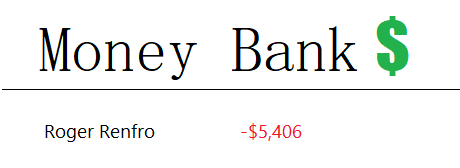
Wait is that a… minus sign? What? I don’t have paid subscribers? You’ve all been reading this for free!? Okay, that’s it. Forget this article. You can’t read any more Load Last Save until I get this fixed. Don’t read any other article unless you’re paying. Honor system.
In the meantime, I’m going to see if I can escape the authorities by going into Canada.
Here’s a small list of some of my favorite indie games $20 and under:
KILL KNIGHT (15.99)
Pizza Tower (20.00)
Assault Spy (20.00)
Enter The Gungeon (14.99)
La Mulana (14.99)
Nex Machina (19.99)
Peak (7.99)
En Garde! (19.99)